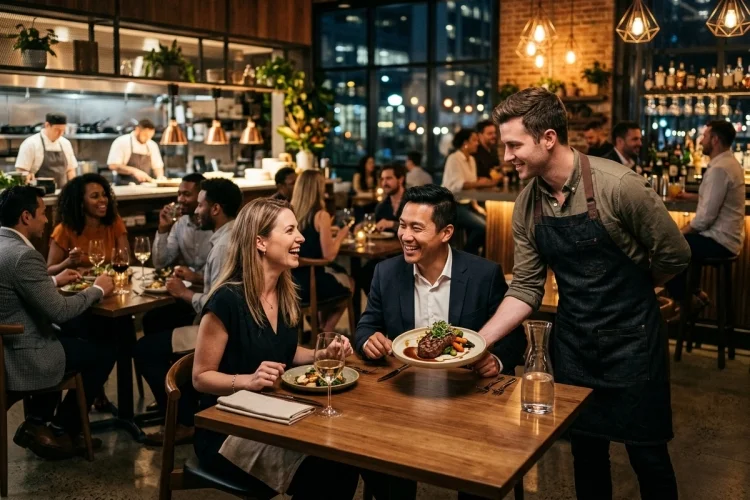
Fine dining is becoming more relaxed. Casual restaurants are becoming more sophisticated. Fast-casual brands are using better ingredients, chef-driven menus, design-led interiors, and increasingly premium price points.
The result is a restaurant market where traditional category labels tell customers less than they once did.
When Premium Dining Categories Converge, differentiation shifts away from simply being “upscale.” Restaurants need distinctive menu architecture, stronger cultural relevance, recognizable brand codes, and a clear value proposition.
The winners will be concepts that guests can describe easily-even when the traditional category they belong to becomes difficult to define.
Understand Why Category Boundaries Are Blurring
Restaurant categories have been moving toward each other for years, but economic and consumer changes are accelerating the shift.
Restaurant Dive reported that pricing convergence has altered how consumers compare restaurant segments, with some casual concepts gaining an advantage over limited-service competitors when the price difference becomes small enough for guests to trade up for a fuller experience.
Meanwhile, fine-dining chefs increasingly borrow the accessibility and flexibility associated with more casual formats.
This creates hybrid concepts.
Guests can now find serious culinary technique in counter-service restaurants and energetic atmospheres inside expensive dining rooms.
For operators, this means category labels become less important than perceived value.
Customers increasingly ask: What will I eat? How will I feel? What makes this place special? Is it worth the money?
Those questions create the new competitive landscape.
Build a Menu With a Recognizable Point of View
A premium menu should not feel like a collection of everything currently fashionable.
Truffle pasta, wagyu, crudo, caviar, lobster, and elaborate cocktails appear across many premium concepts. Adding more expensive ingredients rarely creates lasting distinction.
A stronger strategy is building a recognizable culinary point of view.
That could come from a regional cuisine, a cooking method, a particular ingredient philosophy, or the chef’s cultural background.
For example, instead of another broad “modern Asian” restaurant, a concept might explore contemporary Filipino coastal cooking or regional Japanese fermentation.
Specificity can create stronger memory.
Current culinary research also suggests guests want both familiarity and exploration. The National Restaurant Association’s 2026 forecast emphasizes comfort, nostalgia, global flavors, local sourcing, and creative interpretations of recognizable foods.
Restaurants can use familiar dishes as entry points while giving them an unmistakable culinary identity.
Create Value Through Choice Architecture
Premium dining does not need one rigid price level.
A smart menu gives customers several ways to participate in the brand.
One guest might order a full tasting menu and premium wine pairing. Another might sit at the bar for two dishes and cocktails. A third may share several plates with friends.
All three can experience the same concept.
This flexibility is increasingly useful when consumer spending is uneven.
The National Restaurant Association’s 2026 outlook expects continued restaurant-industry growth, but operators still face cost pressure, uneven traffic, and customers carefully managing discretionary spending.
Restaurants can respond through price architecture rather than constant discounting.
Offer accessible entry points, clear mid-range choices, and premium trade-up opportunities.
The objective is not making every item affordable to everyone.
It is allowing guests to control the size of their occasion while keeping the overall brand premium.
That makes the concept commercially flexible without becoming confusing.
Own a Dining Occasion
When restaurants look increasingly similar, owning a specific occasion can become a powerful differentiator.
A restaurant could become the obvious destination for dates, business dinners, birthdays, late-night socializing, Sunday lunch, or pre-theatre dining.
The cuisine is only part of that decision.
Opening hours, table layout, music, lighting, pacing, reservation policy, group seating, and beverage program all reinforce an occasion.
Fine dining remains particularly connected to special occasions. Restaurant Dive reported that some higher-priced restaurants have retained customers precisely because diners continue spending for meaningful occasions even while reducing more spontaneous restaurant visits.
This provides a strategic opportunity.
Instead of saying, “We are premium Italian,” a restaurant might effectively position itself as “the lively Italian place for celebrations.”
That is much easier for customers to remember and recommend.
Let Service Become a Brand Code
Premium restaurants often talk about service quality, but fewer define a distinctive style of service.
Formal service is one option, not the universal answer.
One concept might deliver extremely knowledgeable but informal hospitality. Another may emphasize tableside theatre. A third could build around privacy, restraint, and minimal interruptions.
Casual dining itself is increasingly competing on experience. Restaurant Dive’s 2026 outlook argues that strong in-restaurant experiences remain a critical differentiator as price and value propositions overlap across restaurant categories.
Premium operators should take that lesson seriously.
Training should include not just what employees do but how interactions should feel.
Are recommendations conversational or formal? Do servers tell ingredient stories? Is humor encouraged? Are guests given extensive explanations or allowed more privacy?
A recognizable service personality can make nearly identical food feel like a completely differnt experience.
Use Cultural Relevance Without Chasing Trends
Trend chasing creates short-term attention but weak long-term identity.
Restaurants should distinguish between trends that fit their concept and trends that merely seem popular.
Local sourcing, global flavors, wellness, nostalgia, and experiential dining are all influencing consumer preferences in 2026.
A strong brand filters those ideas.
A French bistro might explore local farmers and regional seasonal ingredients without suddenly adding viral fusion dishes. A modern Southeast Asian restaurant can engage with wellness through vegetable-driven plates while remaining rooted in its existing flavor language.
The goal is cultural relevance without identity drift.
Ask whether a new idea strengthens the restaurant’s story.
If customers would be confused to see the product on the menu, its popularity elsewhere probably does not justify adding it.
Long-term distinctiveness comes from evolving within a clear framework.
Design Memorable Moments Beyond the Plate
The competitive advantage of premium dining increasingly sits in moments that cannot be delivered through takeaway.
National Restaurant Association data has shown how strongly fine-dining operators prioritize growing on-premises traffic, while restaurant consumers continue to value social occasions and the experience surrounding dine-in meals.
That creates room for experiential differentiation.
Perhaps guests enter through a dramatic bar before dinner. Maybe bread is baked visibly beside the dining room. The restaurant might offer a distinctive dessert trolley, chef interaction, cocktail cart, or after-dinner ritual.
These elements should support the concept rather than become random entertainment.
One or two strong moments are usually more effective than continuous theatricality.
They also generate stories.
A guest may forget whether the fish cost $46 or $49, but remember choosing it directly from a display before watching it cook over fire.
Memorability creates word of mouth.
And in an increasingly converged premium market, memory is a major competitive asset.
Measure Distinctiveness, Not Just Satisfaction
Guest satisfaction answers whether people enjoyed the restaurant.
It does not necessarily tell management whether they found it distinctive.
A restaurant could receive excellent ratings and still be difficult to describe.
Operators should therefore monitor qualitative feedback.
Which dishes do reviews mention repeatedly? What atmosphere words appear? Which details show up in social photos? What do guests recommend to friends?
The National Restaurant Association’s 2026 travel and dining research notes that word-of-mouth remains a powerful discovery channel and that travelers actively seek memorable local food experiences.
This makes distinctiveness measurable in practical ways.
If customers repeatedly mention the same signature ritual, dish, or atmosphere, the brand codes are working.
If reviews simply say “nice restaurant,” the concept may need sharper positioning.
Strong brands create consistancy in what customers remember, not just consistency in operations.
When Premium Dining Categories Converge, the safest strategy is not becoming more luxurious-it is becoming more specific.
Focused menu identity, flexible price architecture, occasion ownership, recognizable service, cultural relevance, and memorable rituals give guests reasons to choose one premium restaurant over another.
Review what customers actually remember about your concept, then strengthen the elements that cannot be easily substituted by the restaurant next door.